Border patrol and pre‑event site security often lack power outlets and mounting bases. This off‑white handheld individual anti‑reconnaissance detector, validated by multiple field drills, features lightweight ergonomics. It delivers instant detection without pre‑setup for flexible on‑site field screening.
The hand‑held portable anti‑reconnaissance detector has completed full‑item verification in multiple comprehensive field drills. Its main shell adopts high‑strength lightweight off‑white material, ergonomically optimized for long‑time single‑hand holding. Side‑mounted reinforced carrying straps support two‑handed scanning operation or backpack‑style carrying, bringing great mobility for outdoor security personnel.
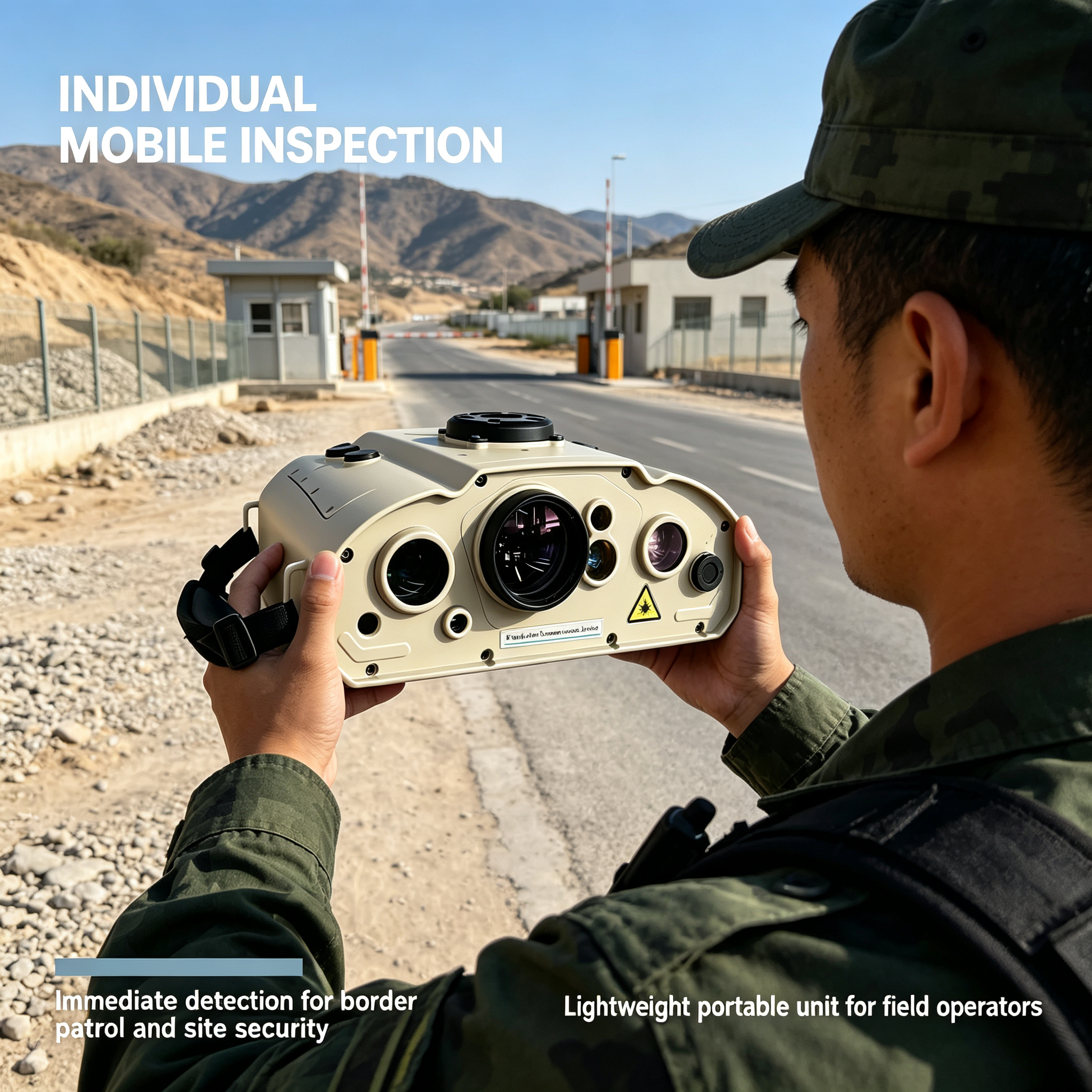
Multiple built‑in optical detecting lenses and signal processing modules draw power from internal high‑capacity battery packs, getting rid of external cable restraints. Operators can start scanning work right after power‑on. When sweeping surrounding hills, buildings and shelters, the hardware recognizes unique lens spectral reflection characteristics, spotting telescopes, observation scopes and concealed long‑range recording gear, and displaying threat bearing plus approximate distance on the built‑in display screen.
It covers abundant practical scenarios: border patrol staff can halt and conduct surrounding‑area risk screening; temporary checkpoints can scan nearby high‑ground buildings rapidly for pre‑mission security clearance; before large‑scale activities, inspectors can survey surrounding mountains and high‑rises. Upon task completion, users can power off and store the unit directly, with zero assembling or dismantling workload.
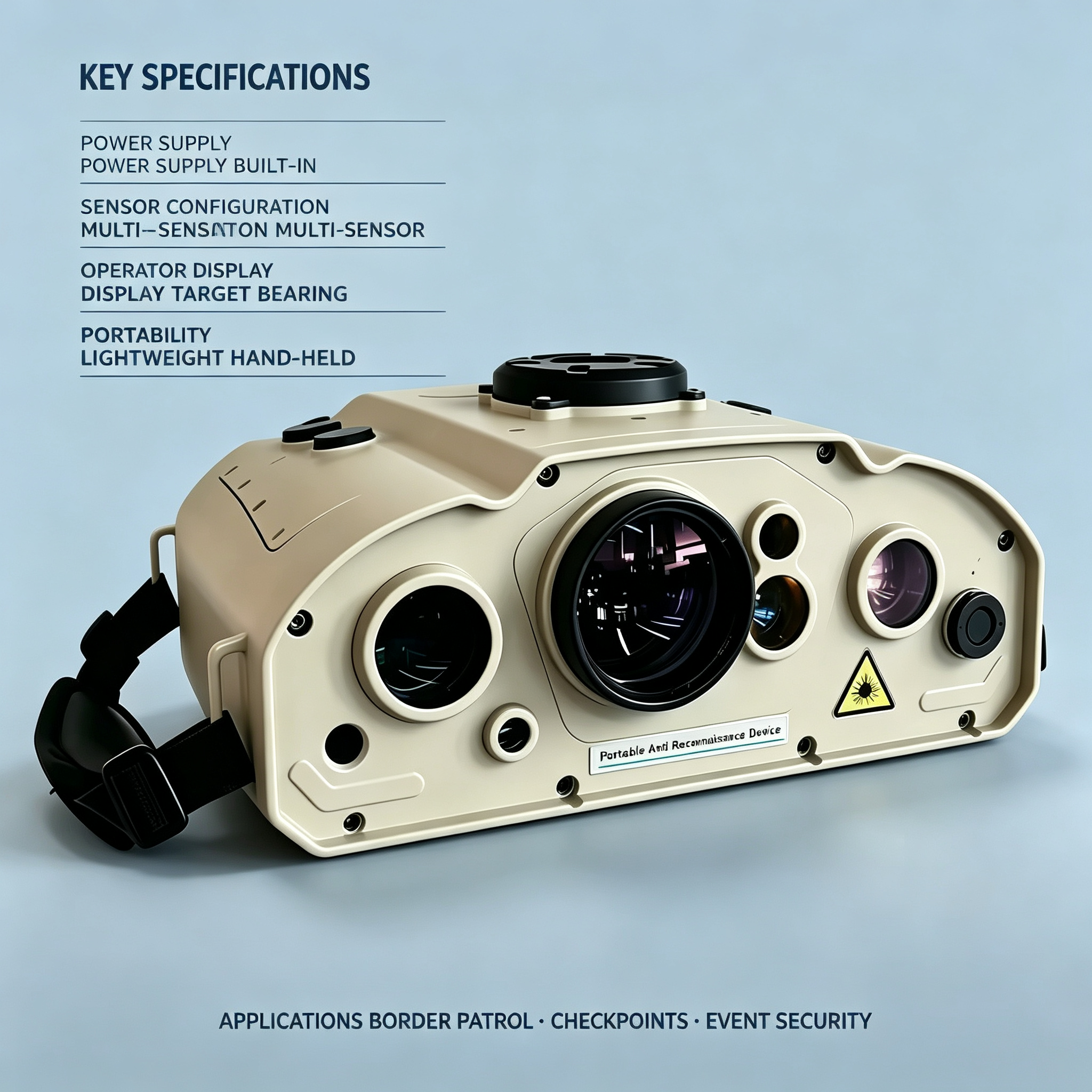
Drill environments include gravel mountain terrain, open‑air checkpoints and suburban flat ground. The equipment maintains stable recognition performance under huge day‑night temperature gaps, dust interference and strong sunlight conditions. Requiring no external infrastructure support, it brings anti‑reconnaissance detection capacity to individual front‑line operators. Cooperating with large fixed‑mount detection systems, it compensates mobile detecting blind spots of heavy‑duty devices.

